Support Services: voice: 956.364.4520 fax: 956.364.5146 tdd: 956.364.4526 toll-free: 800.852.8784
Director: Edda Urrea voice: 956.364.4520 fax: 956.364.5146 Email: Support Services
Mailing Address: Support Services TSTC Harlingen 1902 North Loop 499 Harlingen, TX 78550
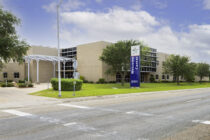
Location: The Support Services Office is located in the Auxiliary Services Building, Room A-121
Office Hours: M - F: 8:00 AM - 12:00 PM M - F: 1:00 PM - 5:00 PM
|
Frequently Asked Questions (FAQ)
Q: How do I obtain childcare at TSTC? Q: If I am being sponsored by DARS, what do I do next? Q: What do I do if an instructor refuses to accommodate me in class? Q: Can a deaf person read lips? Q: Can I just write notes with the deaf person? Q: Can we use a family member to interpret? Q: If I can understand the deaf person's voice, do I still need to get an interpreter? Q: What do I need to know about ASL interpreters? Q: What is Non Traditional Program of Study? Q: What is a Displaced Homemaker?
Q: How do I obtain childcare at TSTC?
A: If you are looking for child care, there are several options available to serve you. Depending on your residence, whether Cameron or Hidalgo/Willacy county, you may qualify for services from outside agencies that can contract child care services while you are a student here at TSTC.
- Cameron County Childcare Management Services (CCMS) helps families find and afford child care. Fees are paid to the child care provider as services are rendered. Students must contact CCMS in order to begin the pre- application process, as well as schedule an appointment with a representative.
- Work Force Solutions - Child Care Services offers subsidized daycare for students living in the Hidalgo/ Willacy Counties. Portions of the cost for child care services are paid for by the agency, however, families are still responsible for paying a percentage of the cost. The cost is based on monthly income and the number of children needing services. Students must contact Work Force Solutions - Child Care Services prior to the semester in order to schedule an appointment and begin the application process.
TSTC provides child care services here on campus.
- The TSTC Early Childhood (0- 3 yrs.) and TSTC NINOS Headstart (3 - 4 yrs.) are located conveniently on campus. Child care is provided at no charge, however, parents must meet the income and eligibility requirements. Students must contact the TSTC Early Childhood/ NINOS Headstart to be directed as to the application process.
Q: If I am being sponsored by DARS, what do I do next?
A: Students receiving sponsorship from DARS are encouraged to identify themselves with our office. Support Services is the designated office to serve as a liaison with these agencies. Students are not required to receive accommodations to process their sponsorship for the college.
Student Process for Books/Tools:
- Student will need to contact our office that they will be sponsored by DARS prior to beginning of semester. Appointment will be set to meet with Coordinator or Director. Student may opt to have an intake done at this time for accommodations. If student does not want to receive accommodations, Release of Information Form will be signed to receive and send information from sponsoring agency.
- Students receiving books or tools sponsorship will need to obtain a Book/Tool List form from office. This form must be completed by the student and returned to our office. This form will then be faxed to the sponsoring agency for approval. Student will need to follow up with our office to inquire if agency has responded with a Purchase Order.
- Once the Purchase Order is received from the sponsoring agency, student may pick up their Purchase Order (Voucher) from our office to purchase approved items at the TSTC Bookstore. Student will need to return the receipt to Support Services.
Student Process for Tutorial Sponsorship:
- Students who receive sponsorship for tutorials will need to contact their respective DARS counselor to inform them of their need for tutorials.
- Student will need to come by Support Services and complete Instructor Recommendation for Tutoring Service Form. Complete form will them be faxed to sponsoring agency.
- Student will need to follow up with DARS counselor to inquire of starting dates for tutoring services.
Q: What do I do if an instructor refuses to accommodate me in class?
A: Instructors are not required to accommodate students who have not presented them with Accommodation Forms. If you have provided your instructor with these forms and returned the signed copies to our office, please contact Coordinator of Disabilities Program or Director of Support Services to discuss your concerns in a timely manner. Support Service Office will mediate all concerns regarding accommodations regarding Instructor refusal to accommodate qualified disabled students in class.
Q: Can a deaf person read lips?
A: Yes, most deaf people have the ability to read lips to a certain extent. However, even the best lip-readers do not get a 100% of everything that is being said. There are also many facts that affect the quality of lip-reading such as beards, mustaches, lighting of the room, and many other things. A deaf person who uses American Sign Language would have a better chance of equal communication when an interpreter is provided.
Q: Can I just write notes with the deaf person?
A: It really depends on the situation and the individual involved. Since American Sign Language is truly another language, it has its own syntax and grammar as well as being very visual. Because of this, many deaf people are not totally comfortable with the English language. This does not mean that the deaf person does not know how to read or that the deaf person is of low intelligence. It is the same as someone coming to America from another country. Some people are very fluent in English and others are not. In very simple situations, the person may be fine just writing notes. In other situations where the information is more complex, the person may prefer an interpreter.
Q: Can we use a family member to interpret?
A: It is never the best option. For many years, the only interpreters were hearing family members of deaf people. However, in today's world, interpreting has become a profession with its own educational standards and Code of Ethics. When family members are used to interpret, these standards are sometimes bypassed. Another factor involved is that many family members are not fluent in ASL or may not even know any signs at all. This is expecially the case with parents of deaf children. While using family members may be fine in an emergency situation, it is best to ask the deaf person whether or not he/she would like an interpreter to be called.
Q: If I can understand the deaf person's voice, do I still need to get an interpreter?
A: No. Many deaf people were not born deaf and therefore acquire some language and vocalization skills early in life. However, this does not mean that the person has any hearing now or that they are perfect lip-readers. There are plenty of deaf people with very clear and understandable voices that still may not be able to understand you.
Q: What do I need to know about ASL interpreters?
A: An ASL interpreter is a person who interprets between ASL and English. The source language and target language depend on who is "speaking." For example, interpreters may interpret from English to ASL--usually from you to the deaf student--or ASL to English--from the deaf student to you and the class. An intepreter is accessible to all parties in a classroom setting.
Note: Be aware of "process time," which is the time required to process information into another language. Recognize that there is a processing time of 5-10 seconds between what you say and the time that an interpreter signs the material to students. This has significant implications, particularly in an interactive classroom. If you ask for class participation (to answer questions, state opinions, give examples, etc.) allow the necessary time for your statement to be interpreted before calling on a student. This will provide an equal opportunity for participation.
Q: What is Non Traditional Program of Study?
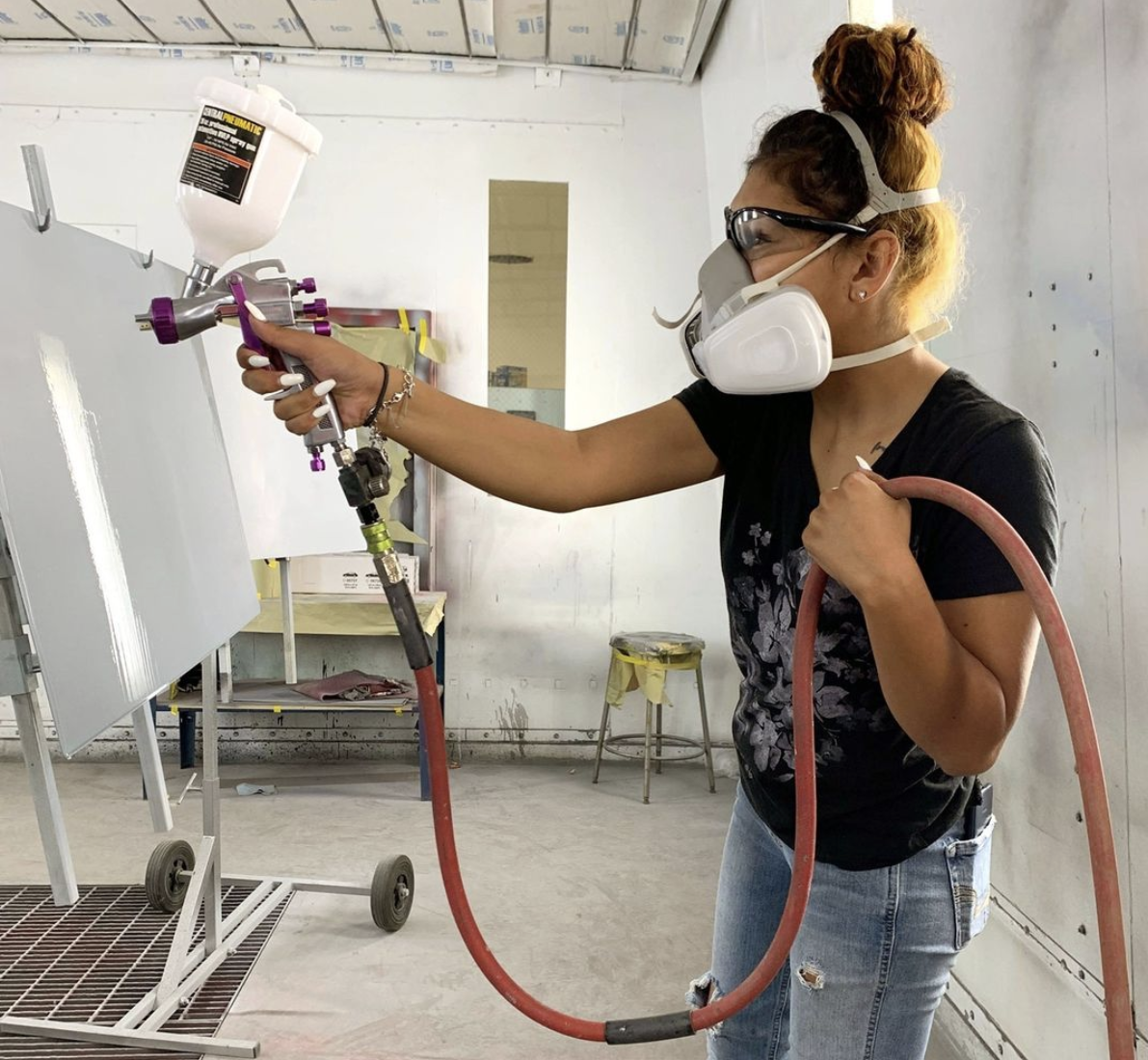
A: Because TSTC is a technical school offering more than 30 different programs in an array of fields, there are often times programs that have been geared towards a certain gender. Fortunately, today’s employment has become more dependent on an individual’s technical and mental capabilities, and not gender. Non Traditional occupations for both males and females are defined as a "field of study in which either gender compromises less than 25% of the current enrollment." TSTC currently lists 13 Non Traditional programs for females and 8 programs for males. Students going into a program that has been labeled Non Traditional qualify for services in order to entice increasing enrollment of students in non-traditional based careers.
Q: What is a Displaced Homemaker?
A: A student that is labeled Displaced Homemaker is defined as "an adult individual, male or female, who has worked primarily without pay to care for the home and family and for this reason has diminished skills for entering the work force." Documentation needed to show proof of Displaced Homemaker status is as follows: tax returns for the past consecutive 3 - 5 years identifying the individual as a housewife/house husband. Upon proof of status, students qualify for services through the TSTC Support Services Office.
Sources: http://www.chsc.org
Disclaimer: This Web site provides links to other Web sites, both public and private, for the convenience and informational purposes of World Wide Web users. TSTC makes no representations, guarantees, endorsement or warranties as to the accuracy, completeness, currency, availability or suitability for any purpose of the information provided on these external sites. TSTC specifically disclaims any and all liability and responsibility for any claims or damage that may arise as a result of TSTC providing the Web site or the information it contains, or that may arise in any way with respect to any Web sites maintained by third parties and linked to the TSTC site. TSTC makes no effort to independently verify, and does not exert editorial control over, information on pages outside ".tstc.edu" domains. TSTC advises site visitors to read the privacy policies of any third-party sites accessed through this site.
TSTC does not endorse any of the products, vendors, consultants, or documentation referenced in this Web site. Any mention of vendors products, or services is for informational purposes only. Further, TSTC is not a "user" of these linked sites for any purpose. Only individuals who access these sites for advice or service become users.
 |